

Between touch and sonic truth
Some objects transcend fashion, technology and time.
The vinyl record is one of them. Not only for its sound, but for what it represents:
a way of understanding music through the physical, the human, the imperfect.
In electronic music (where the digital pulse rules) vinyl remains a refuge for purists.
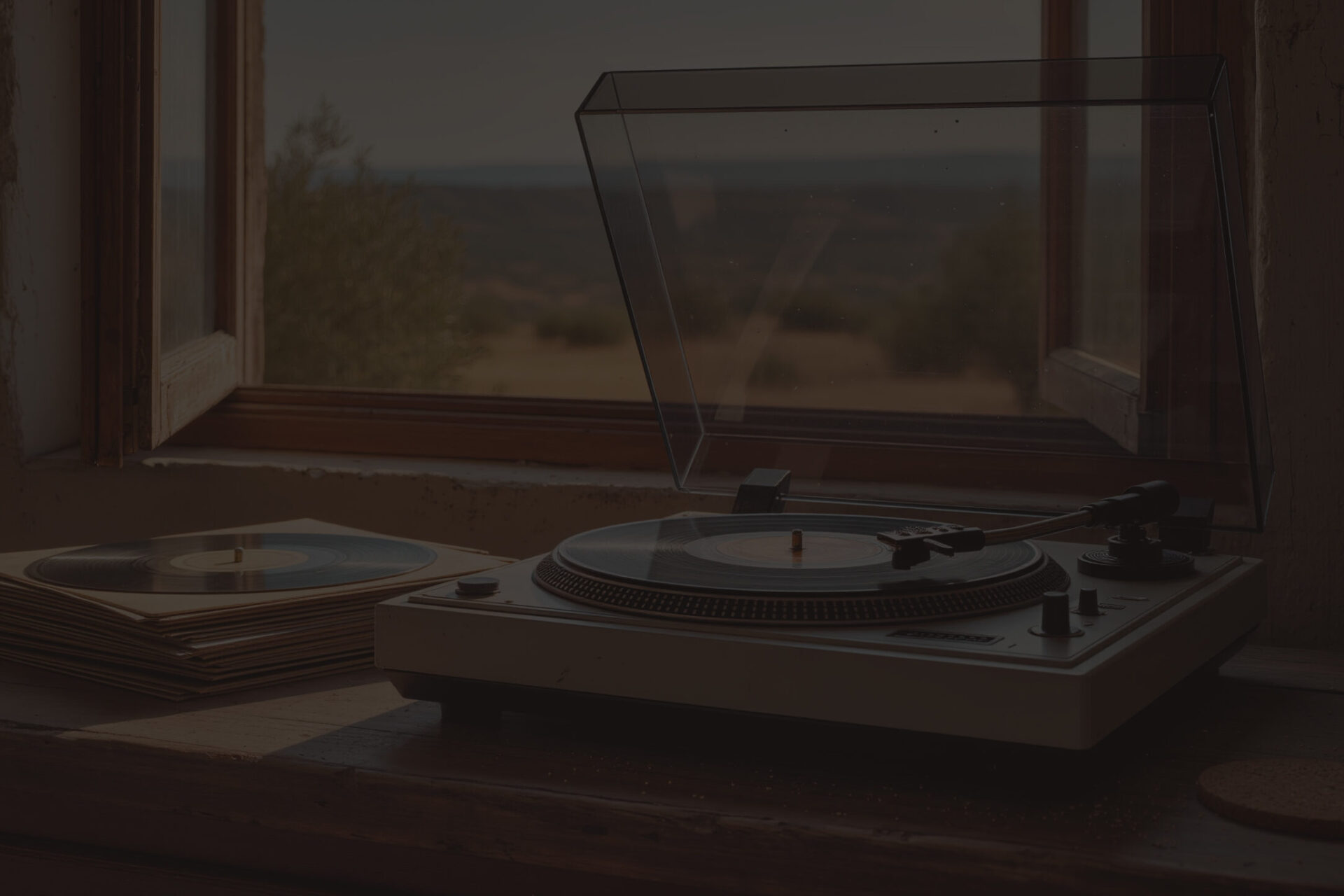
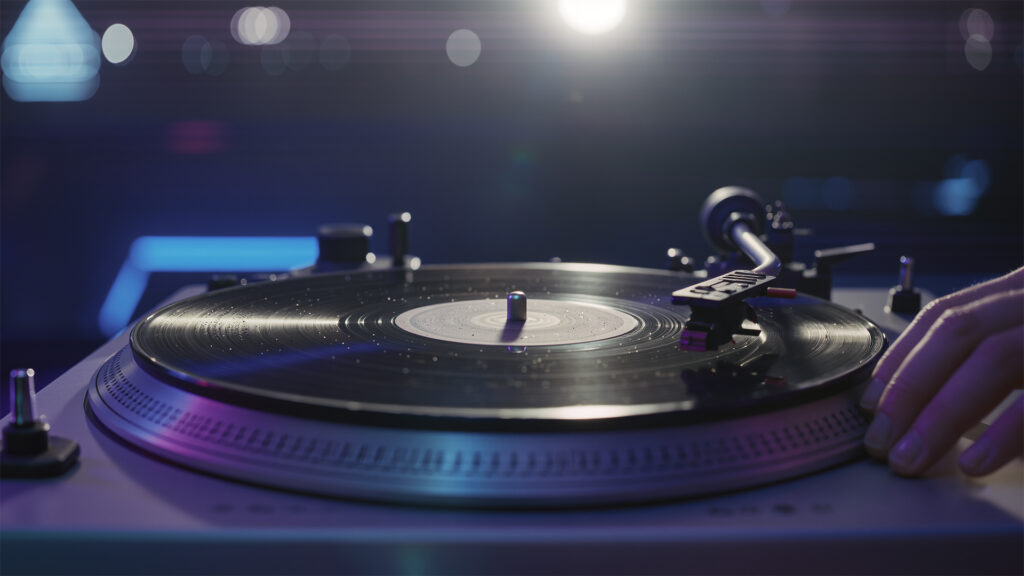
When a DJ drops the needle on a 12-inch, a ritual begins.
The faint crackle of dust, the brush of the spinning record, the clack of the pitch…
None of it is incidental: it’s the very breath of the music.
Vinyl isn’t just a medium: it’s an expressive tool.
It forces you to listen before you act, to anticipate the beat,
to feel the mix as an extension of your body.
No screens, no visual aids, no automatic sync.
Just ears, intuition and control.
That’s why vinyl isn’t for everyone: it’s for those who understand the difference between playing music and performing it.
Serato and the mirage of convenience
Today we live in an era where a laptop can hold thousands of tracks,
and software can match BPMs with surgical precision.
Tools like Serato and Traktor have democratised the act of mixing,
but they’ve also diluted part of its essence.
The digital DJ moves on ground where mistakes don’t exist.
Vinyl, on the other hand, is unforgiving: every set is an exam.
But it’s also a one-off work.
The slight drift between kicks, the micro-adjustment of the pitch,
the physical touch of the needle… all of that makes a vinyl set something unrepeatable.
It’s not about looking down on technology, but about remembering that music, before it’s numbers, is energy.
And some energies can only be channelled through the tangible:
the touch of the record, the warmth of the amplifier and the motion of the turntable.
The 12-inch: a symbol of purity
The 12″ vinyl is still the sacred format of electronic music.
Its grooves carry not just the main track, but a story:
that of the artist, the label, the crowd and the club.
Every vinyl release is a statement of identity.
It isn’t just a distributed digital file: it’s an object you own, collect and look after.
It represents something platforms can’t offer: physical presence.
At Stereo Fall, we see that principle as an extension of our sonic philosophy.
That’s why we carefully select a very small number of titles from our catalogue
(less than 10% of our productions)
to bring them to life on 12-inch vinyl,
available exclusively through ElasticStage.
Each edition is limited to 50 numbered copies,
conceived not as a product but as a collector’s piece.
Records for those who still believe in the ritual of listening with their hands,
and in the beauty of real sound, without filters or compression.
Vinyl and digital: coexistence, not competition
The vinyl vs. digital debate no longer makes sense.
It’s not about choosing, but about understanding what each one brings.
Digital offers reach, exposure and flexibility.
Vinyl offers identity, authenticity and soul.
The labels that keep pressing vinyl don’t do it out of nostalgia,
but out of artistic coherence.
Because vinyl doesn’t sound the same, isn’t perceived the same, isn’t valued the same.
When someone buys a record, they’re not just paying for the music:
they’re acquiring a complete sensory and emotional experience,
a piece of sonic history they can touch, smell, feel and keep.
The legacy that never dies
In a world where everything is duplicated, copied and compressed,
vinyl remains a symbol of authenticity.
Those who defend it don’t do so out of romanticism,
but out of necessity: keeping alive the connection between sound and soul.
Every time a DJ drops the needle on a Stereo Fall 12″,
they don’t just play a song: they trigger a collective memory.
That of a culture born in the underground,
and still holding out against the speed of streaming.
Vinyl isn’t looking for likes.
It’s looking for listeners.
And that, in the digital age, is the greatest luxury real music has left.