
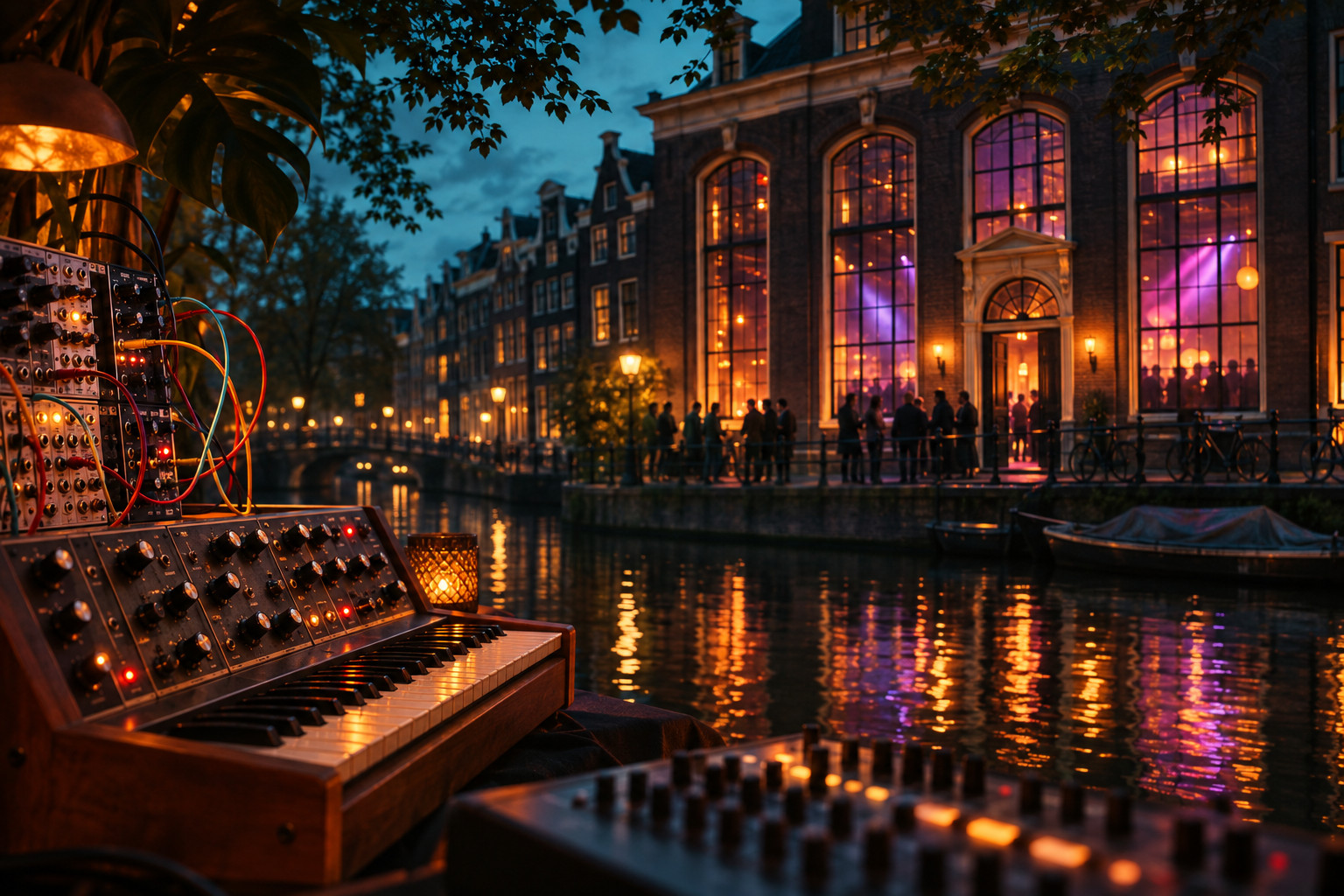

The Amsterdam Dance Event 2026 has closed its 30th-anniversary edition. Beyond the club nights, the week made one thing clear: electronic music is now as much a conversation about technology and culture as it is about the dancefloor. Here is a look at what happened, based on the official programme and the post-event coverage, and what independent producers and DJs can take from it.
Amsterdam Dance Event 2026 in numbers
According to CULTR’s review, the anniversary edition welcomed an estimated 600,000 visitors and nearly 4,000 performing artists across more than 300 venues. ADE’s own announcement set the festival dates as 21 to 25 October 2026. The organisers have already confirmed that ADE returns from 20 to 24 October 2027.
Scale alone is not the story. What stands out is how far the programme stretched beyond conventional club nights.
Venues that redefined the club night
Iconic rooms such as Gashouder, Paradiso, Melkweg and Ziggo Dome hosted performances. Nexus Radio’s recap adds that places like the Centrale Markthal, ARTIS Aquarium, the Wereldmuseum and Fabrique des Lumières brought audiences experiences that challenged what an electronic music event can be. CULTR singles out the Dutch National Ballet and ISH Dance Collective at Gashouder, and Boris Acket working with the Koninklijk Concertgebouworkest at the Centrale Markthal.
Jean-Michel Jarre: the past and the machines
ADE named Jean-Michel Jarre its guest of honour. He played an opening concert at AFAS Live on 21 October, and the organisers framed the appearance around the 50th anniversary of Oxygène. A pioneer of synthesiser music sitting at the centre of a festival that now programmes thousands of acts is a neat piece of symmetry. It ties the genre’s analogue origins to its present.
His conference appearances were arguably more relevant to working producers than the concert itself:
- Music & Machines (21 October, Rosewood Amsterdam): a panel with Armin van Buuren, Lady Starlight and JakoJako on creation, authorship and the evolving role of machines in music. It drew on Jarre’s book Machines, launched at ADE.
- A panel on the positive use of AI in music creation (22 October, Felix Meritis): Jarre alongside Jeff Chang of Google DeepMind, moderated by Joachim Garraud.
Post-event coverage describes the Felix Meritis session as exploring artificial intelligence and spatial audio, two areas increasingly shaping how electronic music is produced, performed and experienced.
The conference side: where the industry is heading
ADE Pro, the conference arm, set a thematic focus on music scenes across Brazil, the Middle East and North Africa, and Sub-Saharan Africa. For anyone who still thinks of electronic music as a mostly European and North American story, that is a useful signal. The next wave of sounds, rhythms and audiences is being built elsewhere.
CULTR also notes that the talks felt fresh compared with 2025 while staying relevant. The through-line was the relationship between creativity and technology, which Enjoy Television describes as one of the central themes of the anniversary edition.
Practical takeaways for producers and DJs
A festival report is only useful if it changes how you work. These are my own reading of the week, not claims from the organisers.
1. Treat spatial audio as a craft, not a gimmick
Immersive formats are no longer confined to research labs. If you produce melodic, organic or downtempo music, where space, reverb tails and texture carry the emotion, spatial thinking is a natural extension of what you already do. Start by being deliberate about depth, width and movement in your stereo mixes. A strong stereo image translates to any format.
2. Decide your own position on AI
Having a Google DeepMind researcher and a synthesiser pioneer on the same panel shows the debate has moved past “for or against”. The useful question for an artist is narrower: which parts of my process do I want to automate, and which parts are the point? Many producers will keep sound design, arrangement and taste firmly human. Others will use assistive tools for admin, stem separation or sketching. Either is a legitimate choice if it is a conscious one.
3. Context makes music memorable
A ballet at Gashouder, an orchestra at a market hall, a night at an aquarium: the strongest ADE ideas paired sound with place. You do not need a city-wide budget. A well-chosen room, a considered lighting plan or a short film for a release can turn a set or a record into something people remember.
4. The emotional end of the spectrum has a stage
ADE’s own guide described DGTL’s night as dedicated to the deeper, more emotional side of electronic music. For labels and artists working in progressive, melodic and organic styles, that matters. Depth is not a niche to apologise for.
Why anniversaries like this matter
Thirty years is long enough to see the cycle. ADE started as a trade gathering and now sits at the crossroads of club culture, contemporary art and technology policy. If you want a wider map of the circuit, our overview of the most important international electronic music festivals places ADE alongside the other major events. And for the historical thread that links Jarre’s early experiments to today’s studios, see our collection of historical curiosities of electronic music.
Closing thoughts
The Amsterdam Dance Event 2026 did not announce a single product or trend that will change your Monday session. What it did was show the direction of travel: more cross-disciplinary work, a serious conversation about AI and immersive sound, and a global scene that keeps widening. For producers, the lesson is to stay curious about tools but anchored in taste. For DJs and listeners, it is a reminder that the best electronic music still comes from people with a clear point of view. See you in Amsterdam, 20 to 24 October 2027.